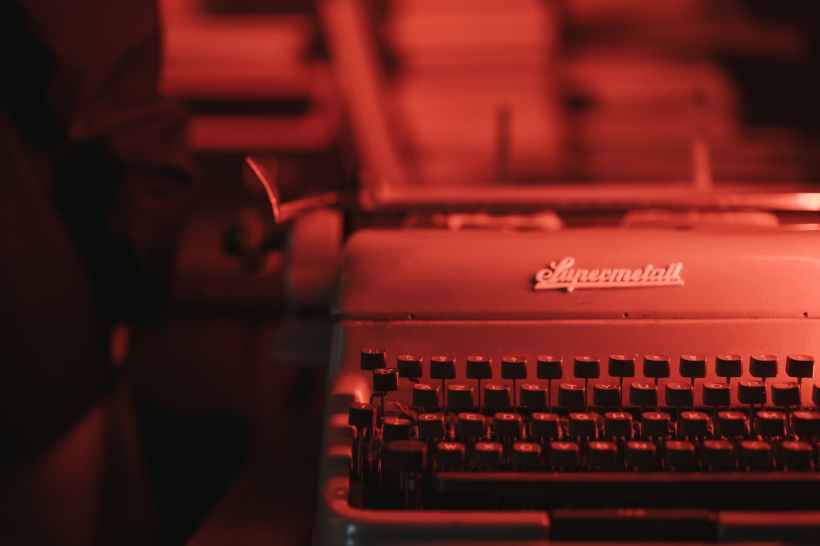
What Structure Makes Visible

Lately, my writing has shifted from attention to structure.
A short reflection on what editing reveals when you slow a story down and ask who is really acting.
New post: What Structure Makes Visible

Attention can take you far.
But I have found that attention alone is not enough.

After spending time reflecting on how stories stay with me—how tone, voice, and small moments linger—I’ve moved into a different phase of the work. Editing at this stage has required more than just attentiveness. It has necessary structure.

Structure has a reputation for being restrictive. Mechanical. Scientific. But what I’ve discovered is that structure does not limit meaning—it reveals it. When a story is placed under even a simple framework, patterns emerge. Not imposed patterns, but existing ones that were easy to overlook while drafting.

Over the past week, I’ve been working chapter by chapter with a logic worksheet designed to track agency, decision-making, and consequence. It doesn’t ask how well a scene is written. It asks a more fundamental question: What actually happens here, and who makes it happen?

LOGIC WORKSHEET

This shift in focus has been instructive for me.

I have found that when you slow a story down to its essential actions—what a character wants, what they do, what choice they make, and what follows—you begin to see where momentum is real and where it is assumed. You see where a character is acting, and where events are simply occurring around them. You see where information is earned, and where it appears too conveniently.

None of this is about finding fault. It’s about clarity.

What structure makes visible is responsibility. Not moral responsibility, but narrative responsibility. Who carries the weight of the story forward? Who decides? Who pays the cost of those decisions? These questions are easy to answer intuitively while drafting. They are harder—and more honest—when written down.

What has surprised me most is how often the worksheet confirms my instincts rather than contradicts them. The chapters that felt solid tend to hold up under scrutiny. The ones that felt uneasy usually reveal why. Structure doesn’t argue with intuition; it gives it language.

There is also a humbleness in this process. A worksheet does not care about intention. It cares about the outcome. It doesn’t ask what I meant in a scene to do. It asks what the scene actually does. That distinction matters.

In many ways, this feels like the natural continuation of the attention I’ve always valued. First, you notice what stays. Then, you ask why it remains. Structure is simply the next level of noticing—one that replaces assumption with evidence.

I don’t experience this phase as narrowing the story. I experience it as sharpening it. The goal isn’t to make every chapter efficient or symmetrical. It’s to ensure that when something stays in the story, it does so for a reason.

Stories don’t persist because they are loose. They persist because they can withstand examination.

This week’s work has reminded me that meaning is not diminished by being tested. It’s clarified. And clarity, like attention, is something a story has to earn.

Why I Write Mystery

I have always been interested in what remains unseen—not because it is hidden, but because it asks something of us.

As a child, I was drawn to stories that required attention. I read Nancy Drew not to rush toward the ending, but to understand how small details accumulated meaning. I read Voyage to the Bottom of the Sea with the sense that entire systems existed beneath the surface, shaping outcomes long before anyone noticed. I read Agatha Christie because her stories assumed something important about the reader: that observation mattered, and that understanding was earned, not delivered.

What stayed with me was not suspense, but process and let not overlook fascination in storytelling.

Storytelling, for me, was never confined to books. In elementary school, at the encouragement of a teacher who saw possibility before I did, I wrote short plays for my classmates. At home, stories were told aloud—by my Uncle Tony, who could stretch truth about his antics as a cook aboard a Navy ship just enough to make it unforgettable as well as intriguing, and by a childhood friend whose imaginative “tales” were less about deception than invention to mask her true self. They were wonderful stories, though I knew they were untruths, I loved them, and they made me smile. Through them, I learned that stories are not simply about what happened, but about how meaning and feelings are shaped in the telling.

Some stories were true. Some were not. But all of them revealed the same thing: narrative is how people make sense of experience.

I am not drawn to complexity that exists to impress. I believe problems should be solvable by the average person—not easily, but honestly, in ways that feel real and believable. A puzzle should reward care, not exclusivity. It should trust that attention, patience, and emotional investment are enough.

This belief is central to why I write mystery.

At its best, mystery is not about cleverness. It is about orientation. It asks the reader to decide what matters, what can be trusted, and what might be misleading. It creates space for reconsideration. Clues are not just information; they test how we see.

The unknown has never felt empty to me. It feels full of things we miss—assumptions we make, details we overlook, and truths we avoid because they complicate the story we tell ourselves. Writing mystery allows me to look closely at how people navigate uncertainty: how misunderstandings happen, how certainty can feel safer than curiosity, and how what is right in front of us is often the last thing we are willing to see.

I am less interested in shocking the reader than in clarity—the moment when everything finally makes sense. Not because the answer was cleverly hidden, but because we were not ready to see it yet. That kind of ending does not just explain what happened; it changes how the entire story feels when you look back.

I do not write mysteries to offer escape. I write them to offer structure and meaning—enough form to hold uncertainty without forcing resolution too quickly. Enough order to allow meaning to emerge rather than be imposed.

The unknown has fascinated me for as long as I can remember. Writing mystery is simply the most honest way I know to engage with it—to examine how understanding is built, how truth reveals itself unevenly, and how attention remains one of the most undervalued forms of intelligence.

This is me.

Wendy